Flow Divider
R2026bThis example shows a simple way of modeling of a flow divider and using it with a load harness. The flow divider helps divide the input flow in desired percentage when the loads connected to the two lines are unequal. The flow divider allows flow only in forward direction. When it is used with loads where unloading is done through reverse flows, it should be used with direction control valves.
Model
The following figure shows the model of a flow divider with the test harness. The output of the model is the plot of flow through the channels A and B for a given input flow.
open_system('FlowDivider')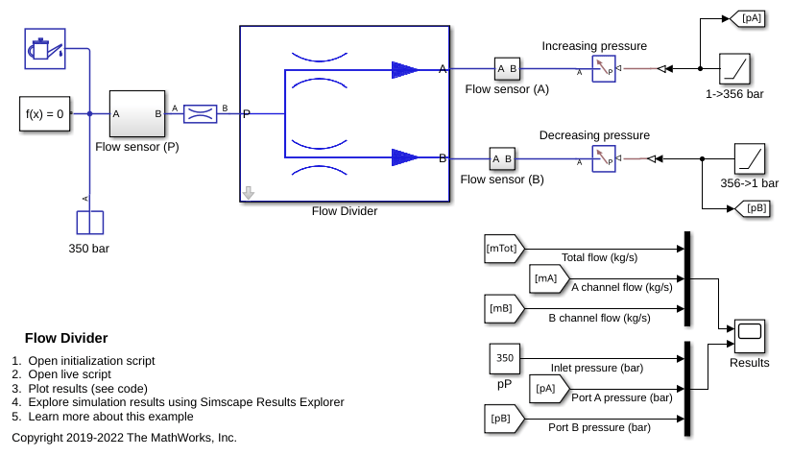
Modeling Modes
The flow coming in through the source is sent to load A as defined by specified flow fraction. The remaining flow goes to load B.
There are a total of five modes of operation for the system:
Mode 1: Blocked condition: or which implies that no flow can happen in the system.
Mode 2: A port closed: which implies port A closes and flow occurs from P to B due to the existing pressure difference.
Mode 3: B port closed: which implies port B closes and flow occurs from P to A due to the existing pressure difference.
Mode 4: Controlled flow condition 1: and which implies that flow occurs from port P to A based on pressure difference while mass flow fraction condition is maintained.
Mode 5: Controlled flow condition 2: and which implies that flow occurs from port P to B based on pressure difference while mass flow fraction condition is maintained.
Simulation Results from Simscape Logging
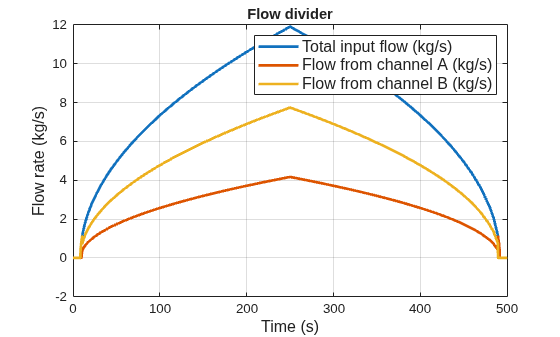
This plot shows the flow through the channels A and B for a given input flow.
FlowDividerPlotQCharacteristics;