Electric Vehicles
R2026bIn this section, you can find examples of electric vehicle automotive systems.
Featured Examples
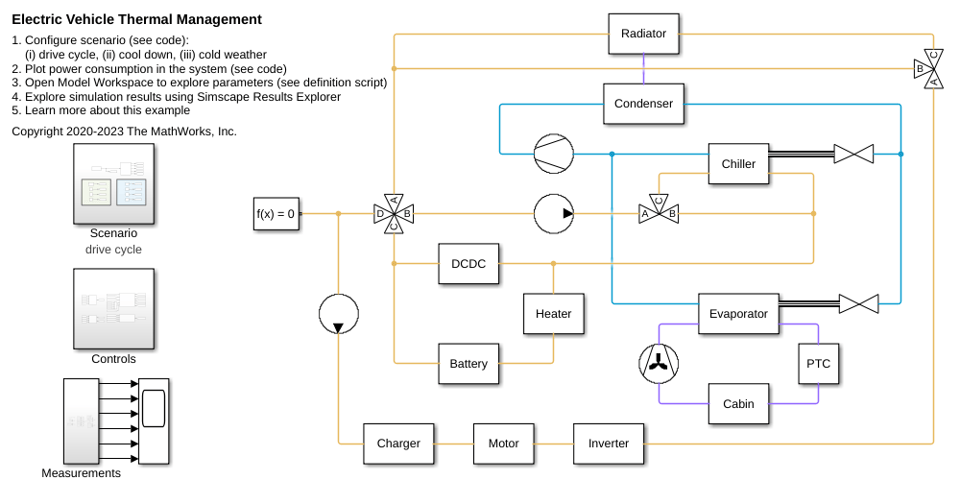
Electric Vehicle Thermal Management
Model the thermal management system of a battery electric vehicle.
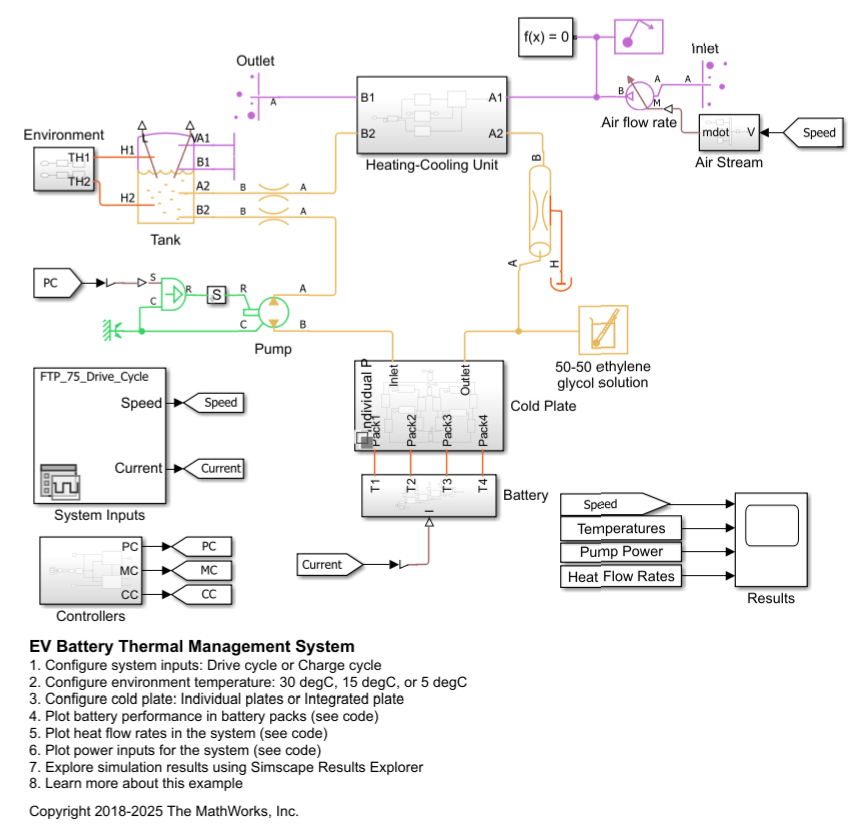
EV Battery Thermal Management System
An Electric Vehicle (EV) battery heating-cooling system. Maintaining the battery temperature within an optimal range is important for efficient charging and discharging. The model simulates either the FTP-75 drive cycle or a fast charge cycle at different environment temperatures. A thermal liquid coolant circuit conveys heat between the battery and the heating-cooling unit. For more information on designing EV battery cooling systems, see EV Battery Cooling System Design.
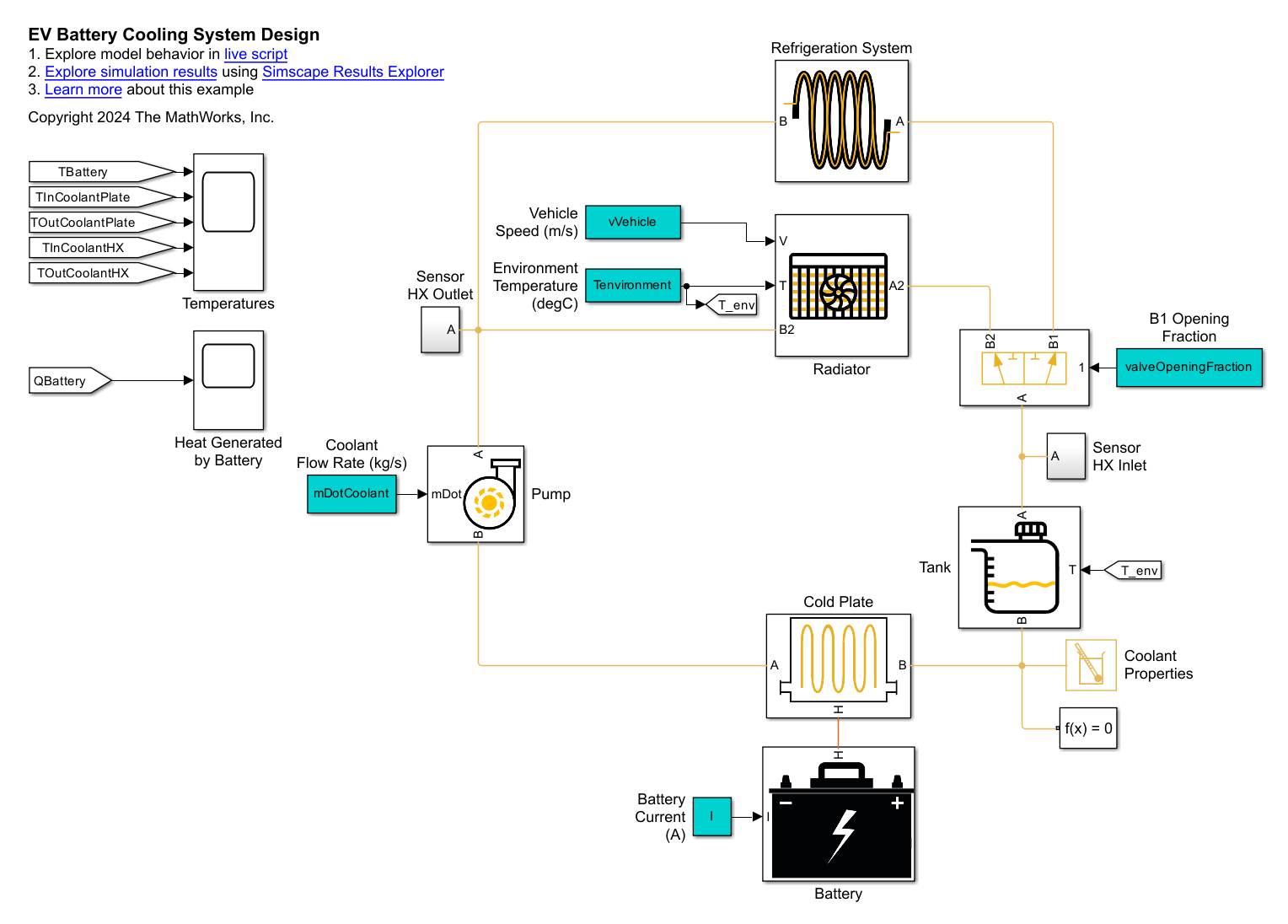
EV Battery Cooling System Design
Explores several questions related to heat exchanger sizing and system performance. The example answers the questions using fundamental heat transfer principles, and then confirms the behavior in test harness models and a full system model.
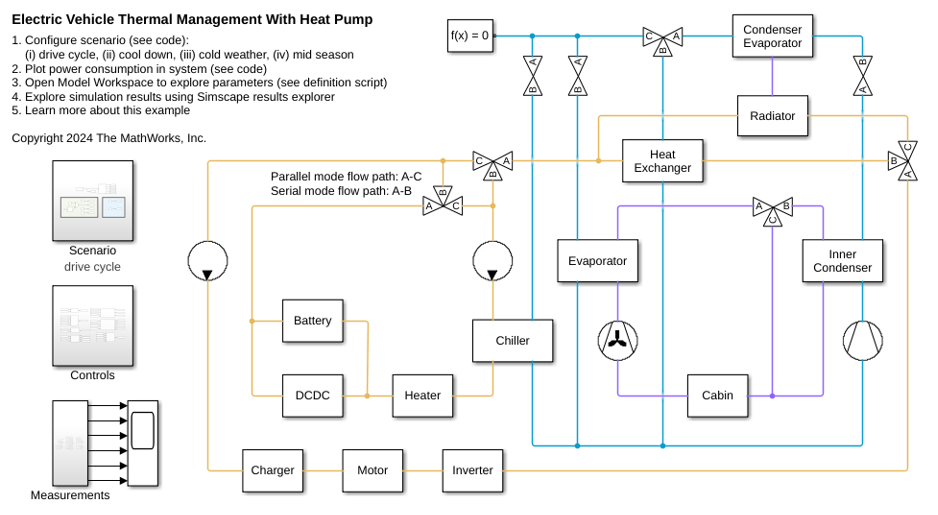
Electric Vehicle Thermal Management with Heat Pump
Models the thermal management system of a battery electric vehicle (BEV) that includes a heat pump for cabin heating. The system consists of two liquid coolant loops, a refrigerant loop, and a cabin air HVAC loop. The thermal loads are the batteries, the power electronics, and the cabin.
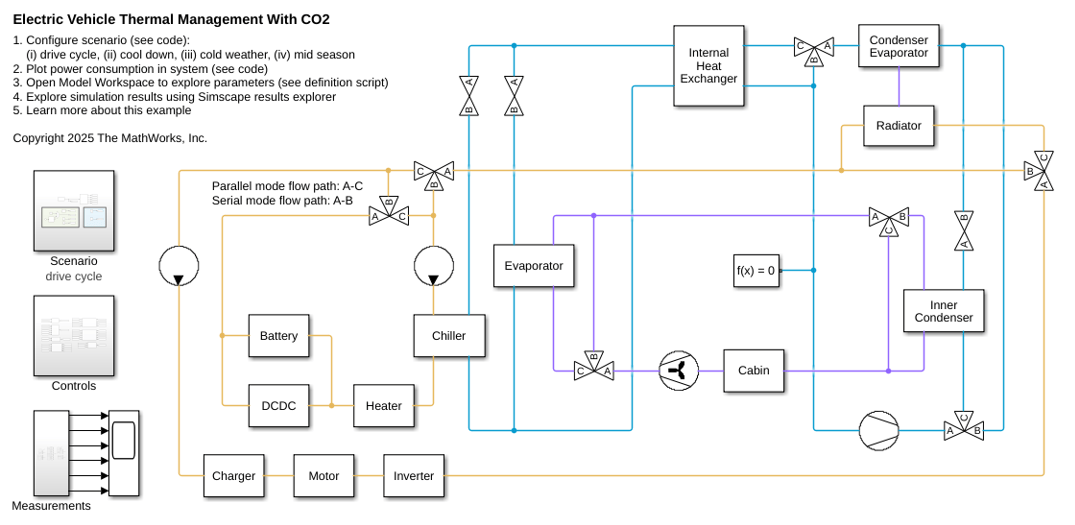
Electric Vehicle Thermal Management With CO2
Models the thermal management system of a battery electric vehicle (BEV) that uses a transcritical CO2 (R-744) refrigeration cycle for cooling and heating. The system consists of two liquid coolant loops, a CO2 refrigerant loop, and a cabin air HVAC loop. The thermal loads are the batteries, the power electronics, and the cabin.

