Design and Simulate SerDes Systems
R2026bHigh-speed electronic systems suffer from signal degradation caused by various impairments such as impedance mismatch, attenuation, and crosstalk. Using the equalization and gain modulation blocks in the SerDes Toolbox™, you can compensate for the distortions introduced by the lossy channels.
Starting with the SerDes Designer app, you can design the top-level SerDes systems and perform statistical analysis. Use the building blocks and system objects to design, configure, simulate and analyze the SerDes system including the transmitter and the receiver.

Apps
| SerDes Designer | Design and analyze SerDes systems for export to Simulink, MATLAB and IBIS-AMI |
| IBIS Designer | Create IBIS model files from SPICE simulation data or electrical parameters (Since R2026b) |
| S-Parameter Fitter | Convert S-Parameter network to impulse response |
| CTLE Fitter | Fit poles and zeros to CTLE transfer functions (Since R2022a) |
Blocks
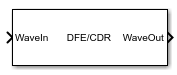 | DFECDR | Decision feedback equalizer (DFE) with clock and data recovery (CDR) |
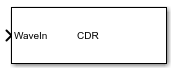 | CDR | Models a clock data recovery circuit |
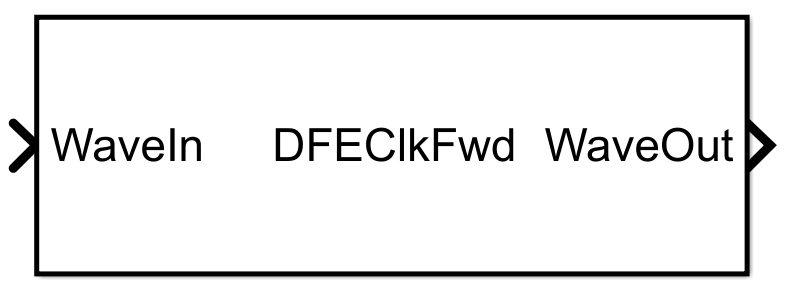 | DFEClkFwd | DFE with Clock Forwarding in the receiver AMI model (Since R2023b) |
 | FFE | Models a feed-forward equalizer |
 | CTLE | Models continuous time linear equalizer (CTLE) |
 | AGC | Automatically adjusts gain to maintain output waveform amplitude |
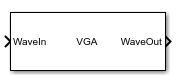 | VGA | Models a variable gain amplifier |
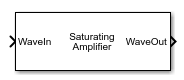 | SaturatingAmplifier | Models a saturation amplifier |
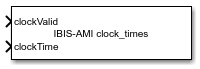 | IBIS-AMI clock_times | Recover SerDes clock time values from custom DFECDR and CDR |
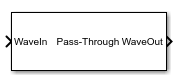 | PassThrough | Propagates baseband signal without modification |
 | Configuration | Configure system wide settings in SerDes system model |
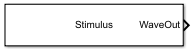 | Stimulus | Set waveform generation method and number of symbols to simulate in SerDes model |
 | Analog Channel | Construct loss model from channel loss metric or impulse response |
 | AMI | Co-design SerDes architecture with other vendor designs (Since R2023b) |
 | Tx | Transmitter block with default settings (Since R2023b) |
 | Rx | Receiver block with default settings (Since R2023b) |
 | Eye Measurement | Calculate metrics from eye diagram (Since R2024a) |
 | Jitter Measurement | Measure waveform total jitter and estimate jitter components (Since R2026a) |
Objects
Functions
Topics
- Design SerDes System and Export IBIS-AMI Model
Create and analyze a SerDes system, and export an IBIS-AMI model using the SerDes Designer app.
- Clock and Data Recovery in SerDes System
Explore the behavior, control and characteristics of a first order clock data recovery (CDR).
- Phase Detectors: Baud-Rate Type-A Versus Bang-Bang
To successfully send and receive data between a SerDes transmitter and receiver you need to satisfy a myriad of conditions.
- Symbol Error Rate
Compare symbol error rates from input stimulus and equalized waveforms.
- The SerDes Toolbox DFE Adaptation
The SerDes Toolbox Decision Feedback Equalizer (DFE) adaptation is a "blind" correlation-based adaptive equalization algorithm.
- ADC IBIS-AMI Model Based on COM with Genetic Algorithm Optimization
This example shows how to improve the performance of SerDes global optimization through the use of genetic algorithms and statistical analysis.
- Statistical Analysis in SerDes Systems
Customize and explore the statistical analysis of SerDes systems.
- Jitter Analysis in SerDes Systems
Inject Jitter into link analysis and equalization design.
- Analog Channel Loss in SerDes System
Define the loss model to represent the analog channel in a SerDes system.
- Redriver Topology
Develop optical redriver models for SerDes systems in Simulink®.
- Linux Version Compatibilities
Generate shared objects on compatible Linux versions.
- Model and Measure Jitter in Serial Data Systems
Model and measure jitter in serial data systems. (Since R2026a)
Featured Examples
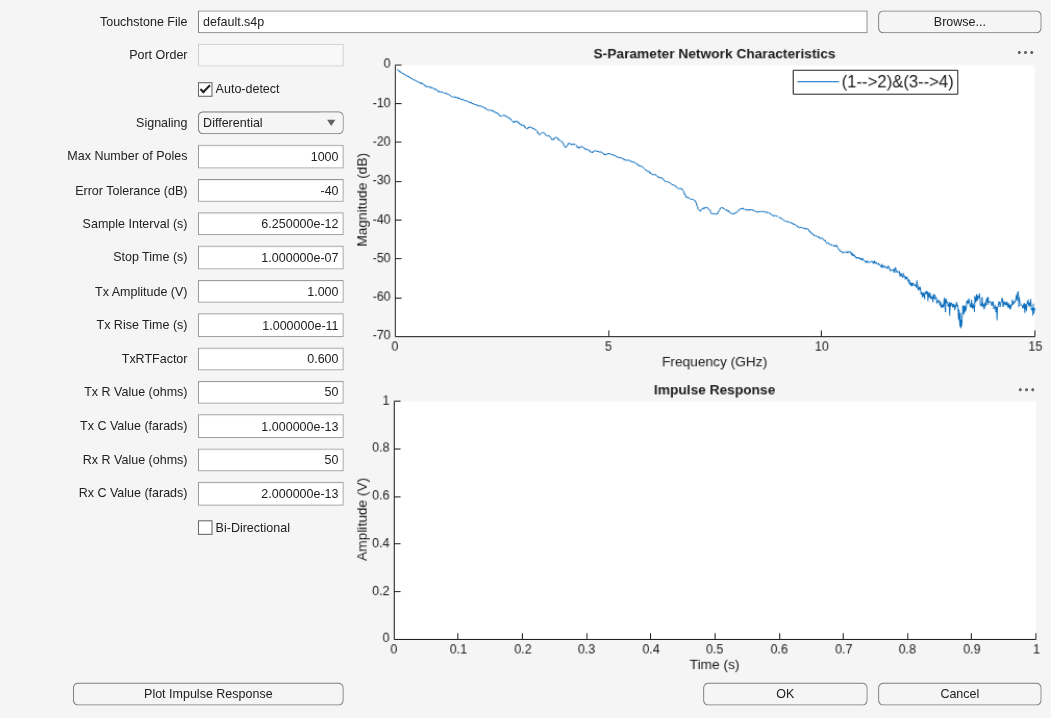
Convert Scattering Parameter to Impulse Response for SerDes System
Find an Impulse Response by combining a Scattering-Parameter (S-Parameter) model of a baseband communication channel along with a transmitter and receiver represented by their analog characteristic impedance values. You can find an impulse response of this network using the sParameterFitter app to create an SParameterChannel object in SerDes Toolbox™. The app also uses some supporting functions from RF Toolbox™ such as rational and impulse.
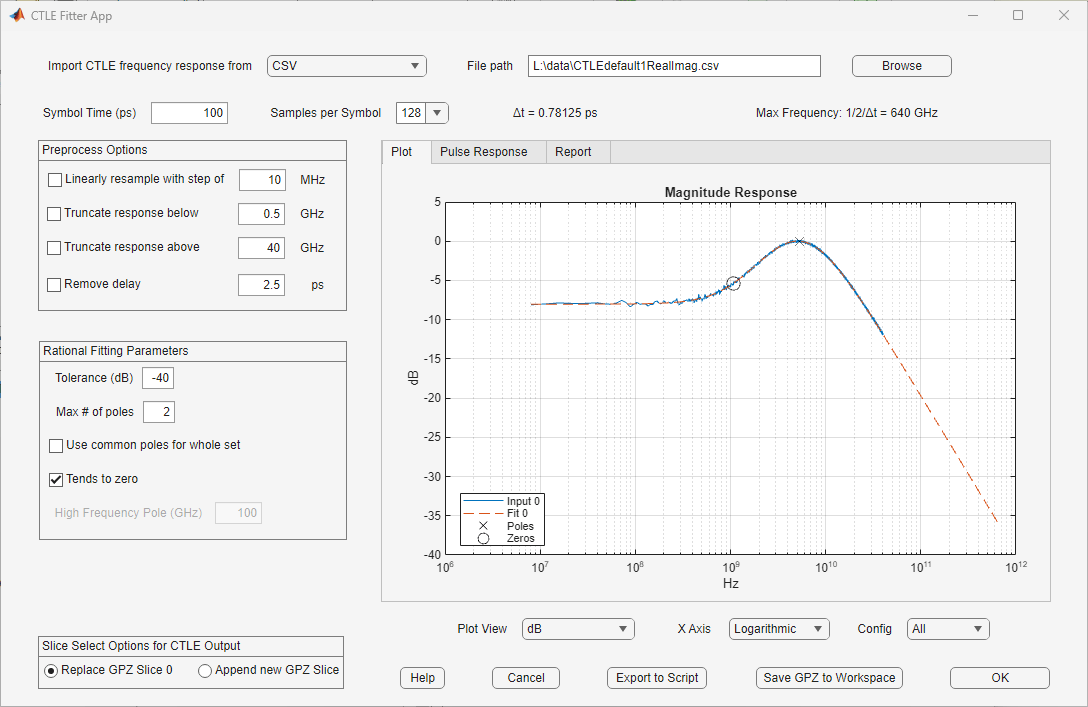
Find Zeros, Poles, and Gains for CTLE from Transfer Function
Use the CTLE Fitter app to configure a CTLE block from SerDes Toolbox™ in the SerDes Designer app or in Simulink®. You can use the CTLE Fitter app to fit zeros, poles, and gains from a transfer function to create a GPZ Matrix and then export to your workspace. The CTLE Fitter app finds the GPZ Matrix by performing a fit comparison to a transfer function using the rational function from RF Toolbox™.
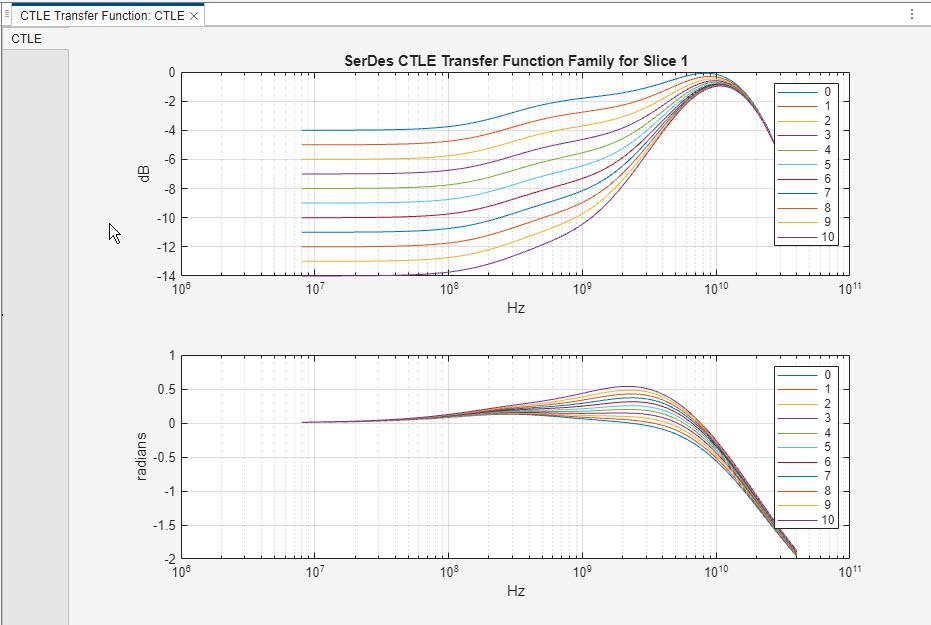
Select Slices of Input Data for SerDes System Blocks
Uses how to select a family of input data from multiple available input data families using the Slice Select parameter of the CTLE and Saturating Amplifier blocks in the SerDes Toolbox™. You can use a single AMI parameter to synchronize the selection of input data between the two blocks.
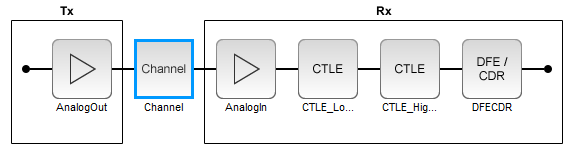
Globally Adapt Receiver Components Using Pulse Response Metrics to Improve SerDes Performance
Perform optimization of a set of receiver components as a system using function optPulseMetric to calculate metrics such as eye height, width and channel operating margin (COM) estimate from a pulse response at a target bit error rate (BER) to evaluate the optimal performance of a particular configuration. The adaptation is performed as statistical analysis (Init), then the optimized result is passed to time-domain (GetWave).
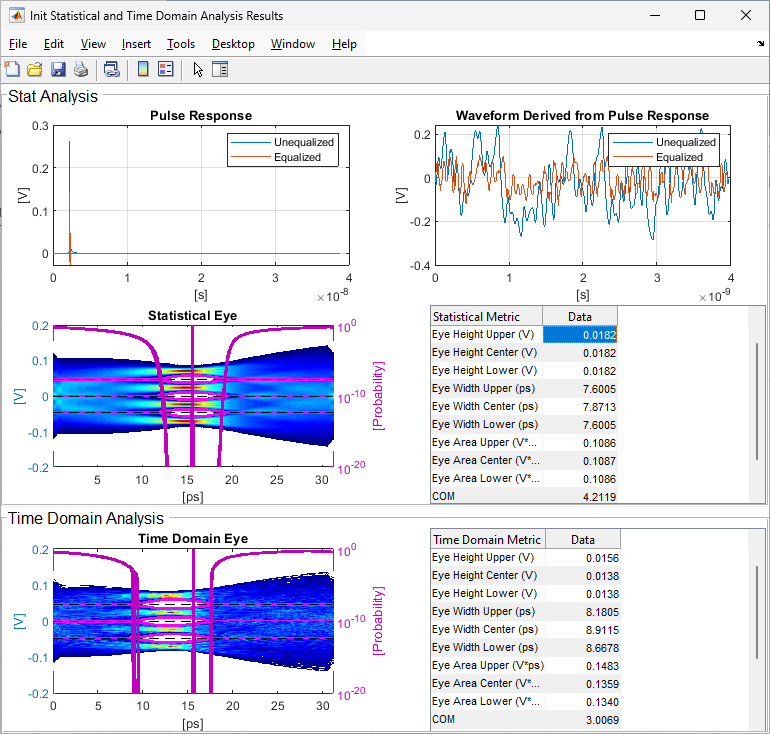
Globally Adapt Receiver Components Using Symbol Metrics
Perform optimization based on symbol metrics for receiver components during statistical (Init) simulation. You can learn how to setup a CTLE and a DFECDR block so their settings adapt together globally during the simulation. This example shows how to improve the example Globally Adapt Receiver Components Using Pulse Response Metrics to Improve SerDes Performance by leveraging various symbol metrics for compliance against different specification requirements.
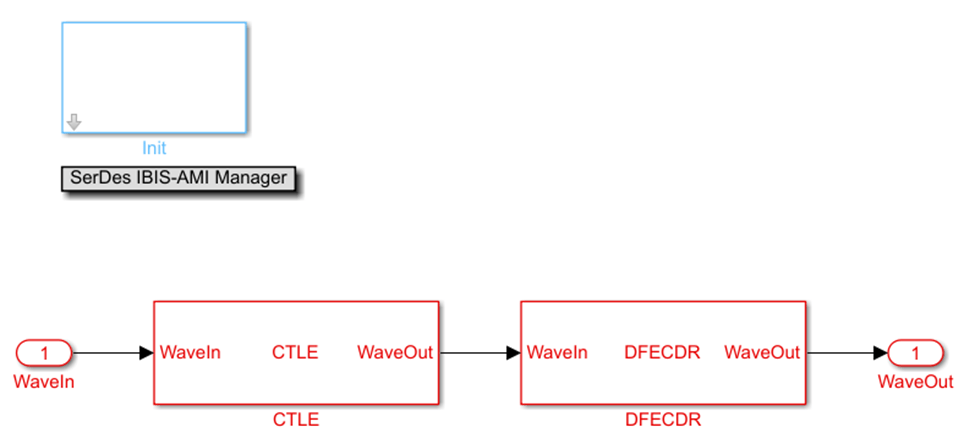
Globally Adapt Receiver Components in Time Domain
Perform optimization of a set of receiver components as a system during Time Domain (GetWave) Simulation. You will see how to setup a CTLE and a DFECDR Block so their settings adapt together globally during simulation. This is a follow on to the example "Globally Adapt Receiver Components Using Pulse Response Metrics to Improve SerDes Performance."
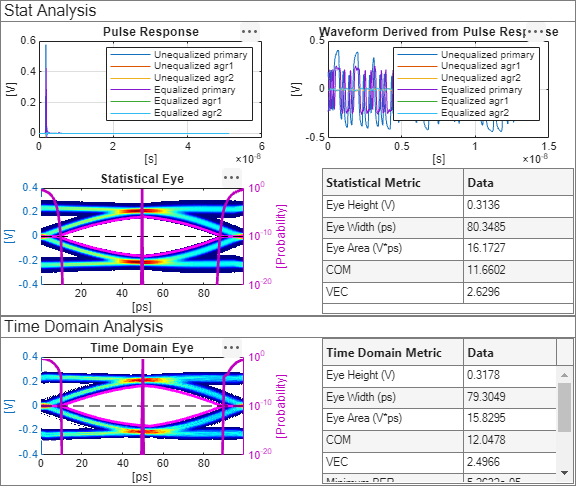
Using Signal Integrity Toolbox Analog Channels in SerDes Toolbox
SerDes Toolbox™ has a variety of channel modeling options such as a loss-based channel, user provided impulse response matrix, or importing an s-parameter. To gain more channel modeling flexibility including via models, w-lines, concatenating s-parameters, and full IBIS analog model support, Signal Integrity Toolbox™ is the best choice. With access to Signal Integrity Toolbox project data from the MATLAB® command window, you can combine the best abilities for both toolboxes for ultimate flexibility.
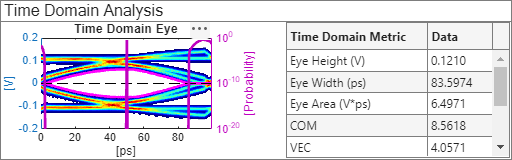
Optimize Eye Height in SerDes System Model
Optimize the performance metrics of a Simulink® model using the msbOptimizer object. The msbOptimizer uses a solver called surrogateopt from the Global Optimization Toolbox™ for optimization. You can optimize any Simulink model for best performance using the steps mentioned here. In this example, you will optimize the eye metrics of a SerDes system. Eye metrics are an indication of the signal quality and reliability and hence important parameters for serial communication.
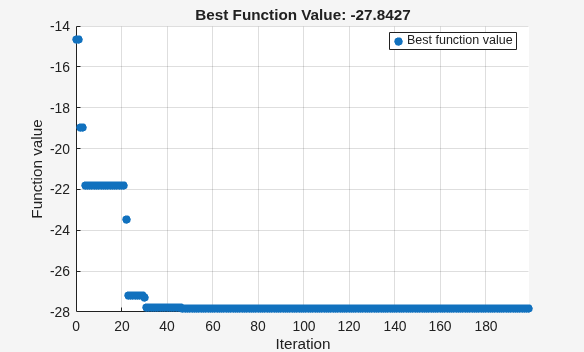
Surrogate Optimization and Scripting for SerDes System Design
Use surrogate optimization and MATLAB® scripting to automatically design and tune a SerDes system. To illustrate these concepts, consider the task of maximizing the area of the statistical eye of a SerDes system that consists of a feed-forward equalizer (FFE) in the transmitter (Tx) and a decision feedback equalizer (DFE) in the receiver (Rx). To achieve this goal, this example uses a surrogate-based method to optimize the tap weights of the FFE and the DFE. The workflow entails the following steps.
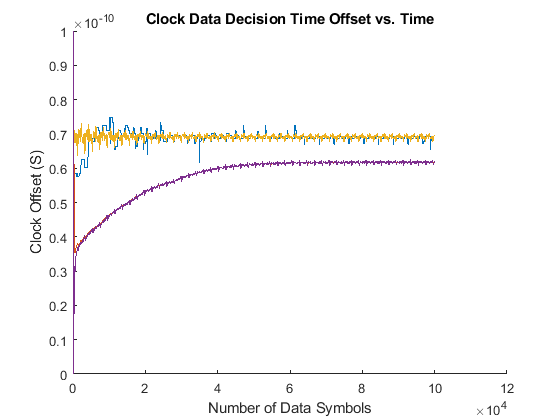
Model Clock Recovery Loops in SerDes Toolbox
Create detailed models of different types of serial channel clock recovery loops such as Alexander (bang-bang), Meuller-Muller, and Hogg & Chu.
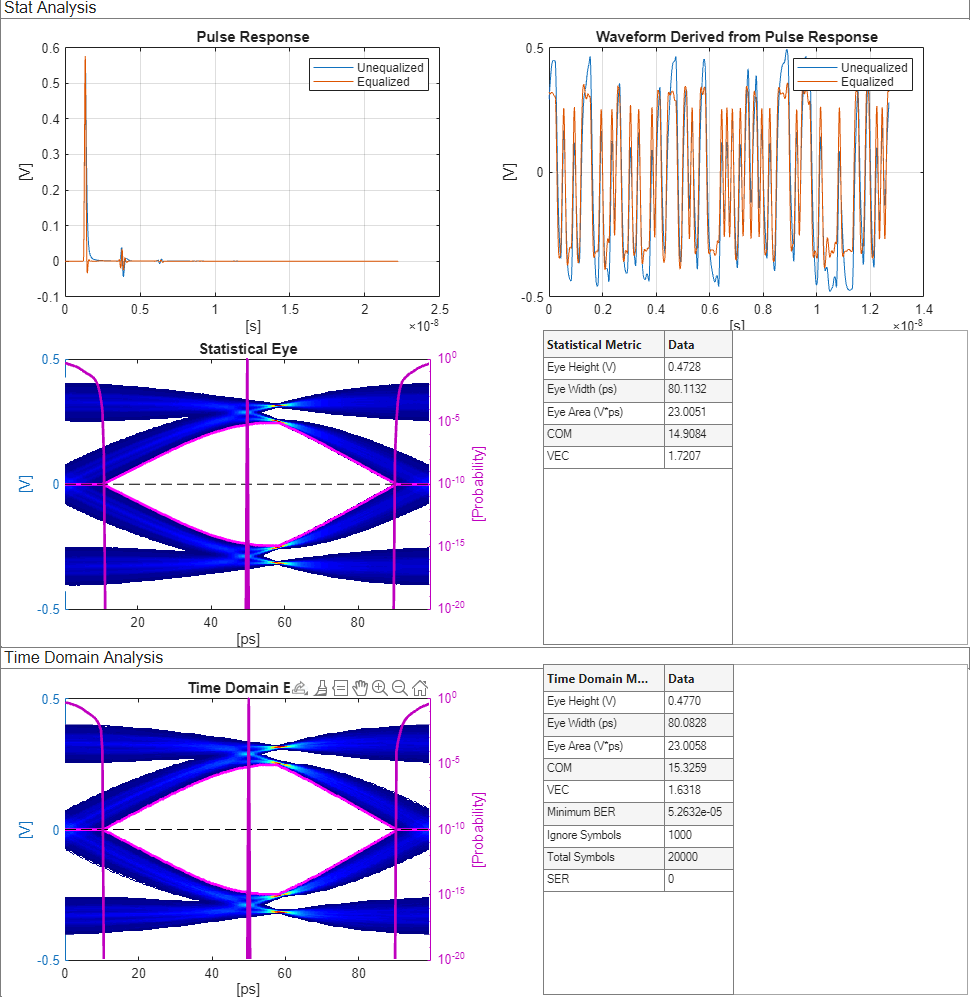
Model Floating-Tap Architectures in SerDes Systems
Model a floating-tap FFE and DFE using SerDes Toolbox™ System objects. This example provides insights into the floating-tap architecture implementation and demonstrates the benefits of such architectures in SerDes systems.
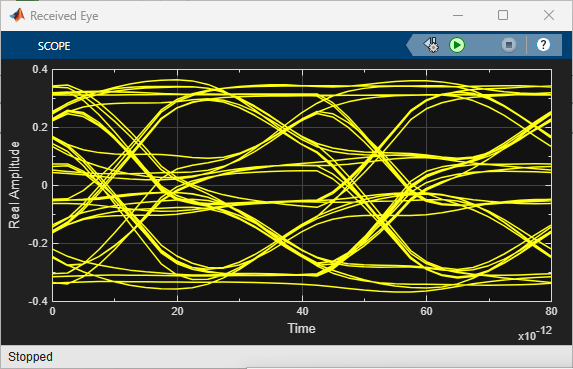
Simultaneous Bi-Directional Analysis in Simulink
Model and simulate simultaneous bi-directional (SBD) die-to-die links using the SerDes Toolbox. It explains how static replica and adaptive echo-cancellation approaches map to the IBIS-AMI framework. The model contains a far-end transmitter, an interposer channel, and a local transmitter and receiver. The example compares the eye before replica subtraction, after replica subtraction, and after adaptive cancellation. It then illustrates the process to export compiled IBIS-AMI models for IP-protected distribution and integrate the result with Parallel Link Designer for system-level analysis.
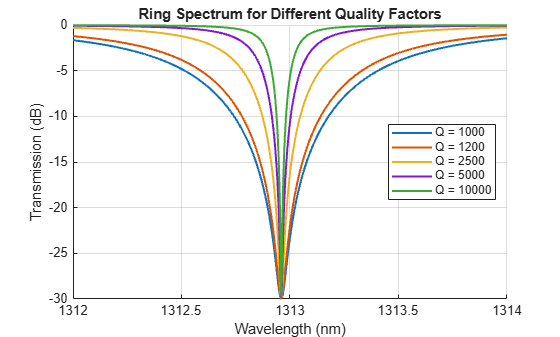
Model Electrical-Optical-Electrical Link for End-to-End IBIS-AMI Co-Simulation
Model a silicon photonic electrical-optical-electrical (EOE) link at 112 Gbps PAM4 using SerDes Toolbox. The optical domain is modeled with custom System objects that plug into the standard SerDes simulation framework, enabling end-to-end IBIS-AMI co-simulation of the electrical and optical channels.

